There’s a line
Below it: schedules, ceremonies, status reports. Above it: the changed number that justified the investment. Both matter. The number is the one you’ll be asked about.

/ 01The line
Most consultants manage projects. We manage outcomes.
Every decision we make, from architecture to governance, flows back to the outcome you bought. The line is how we hold that discipline in the room. Every activity has to answer one question: does this move the number?
A changed number
- Benefits realised — measured, not assumed
- Adoption that sticks after the handover
- A platform that earns its keep twelve months on
- Capability left behind in your team, not ours
Delivery hygiene
- On time — assumed, not celebrated
- On budget — the baseline, not the win
- Stand-ups and ceremonies run cleanly
- Status reported and risks logged
On time and on budget are table stakes. We measure benefits realised. If the KPI didn’t move, the work isn’t done, whatever the status report says.
/ 02How we work
Listen, assess, then build a path your team can walk.
We start with the problem. Strategy comes before the technical stack, every time. A platform chosen before the problem is understood is a guess with an invoice attached.
Get close to the problem
We sit with the people who do the work and see the problem first-hand. Most projects fail because the people solving it never have.
Map the current state
We identify the gaps and the potential, and name the real constraint — the risks and opportunities specific to your context. Then we baseline the number.
A path you can walk
We embed senior people, shape the team around the outcome, and stay until the benefit lands and the capability is yours. On Metagenics' D2C launch that looked like a new channel live in six months, on budget, with zero stock-outs across 280+ regulated labels — then a team that ran it without us.Go-live is the middle, not the end.
From day one, adoption is the thing we’re delivering, dressed up as a platform.
/ 03What we hold to
We tell you what’s true, early and plainly, because we’re on your side of the table.
Three commitments sit under everything we do, and under whether your program lands. You’ll see them in what we notice and what we’re willing to name.
Honest and credible
We say what’s actually true, including when it costs us. Claims come with specifics — numbers, named consequences, time horizons. Authority is demonstrated, not asserted.
A challenger on your side
We’ll break with convention when it produces a better result for you. Not contrarian for its own sake — anti-status-quo when the status quo is failing the client.
Judged on outcomes
On time and on budget are table stakes. The work is judged on whether the KPI moved and whether the adoption stuck. Survey deployed isn’t the headline.
/ 04The standard we hold
Discipline is the mechanism. One more rep.
You build capability the way you build anything hard: by doing the difficult thing again, deliberately, until it sticks. That’s the standard we hold ourselves to, and the one we leave behind in your team.
Get close to the problem. Most projects fail because the people solving it have never seen it.
Name what’s actually happening — including the commercial incentives nobody wants to say out loud.
Measure the benefit, not the activity. Baseline captured, KPI moved, value realised.
Leave the capability behind. The win is your team able to do it without us.
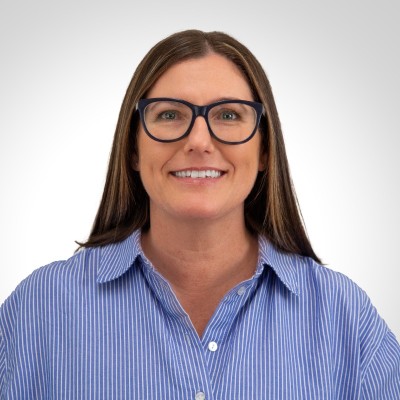 Suzie Young — Head of Digital ANZ, Metagenics
30 minutes of clarity with a senior consultant