The investment lives above the line. So should the answer
Jira has tech delivery covered. Tollgate runs on that same Jira and gives sponsors the project governance and control they need to steer the investment.
The control you need. Agile, left alone.
.gif)
“I'll come back to you on that.”
The sponsor asks the obvious follow-up. What did that change do to the budget? Which work packages are at risk because of it? Are we still on track for the payoff?
The answer is in five places at once. Cashflow in a spreadsheet. Status in last fortnight’s deck. Risks in Confluence. Decisions in meeting minutes. Delivery in Jira. They all disagree, and nobody can say which one is current.
So the conversation stops. The picture was stale before it was presented, and the person in the middle is the integration layer. All that effort, and no more insight than the monthly steerco slide.
One live case file for the investment, kept where the work already lives.
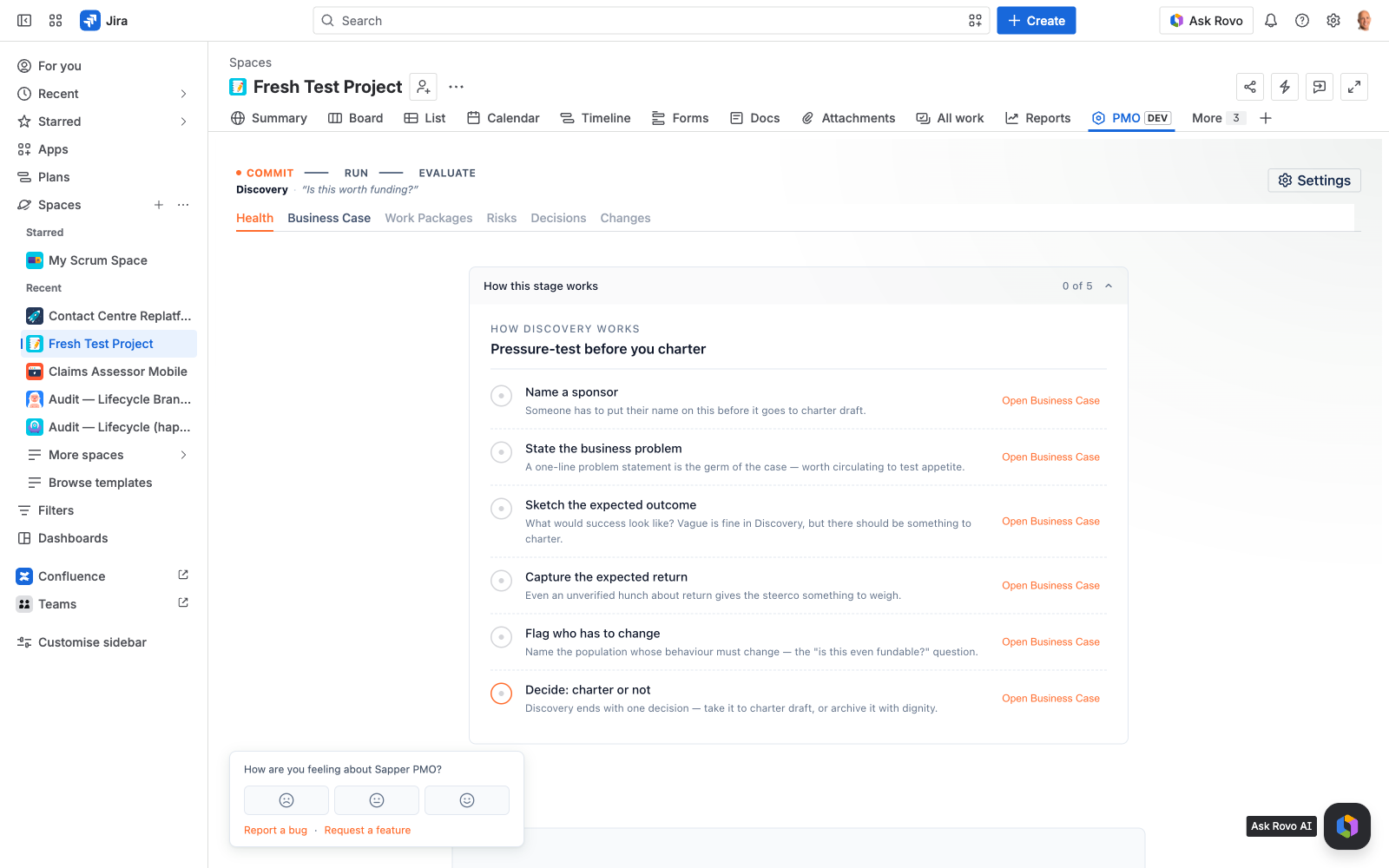
Tollgate sits on each Jira project as six tabs, plus a portfolio view across them. The picture is current because it’s kept here, alongside the work, so the night-before-the-meeting rebuild goes away.
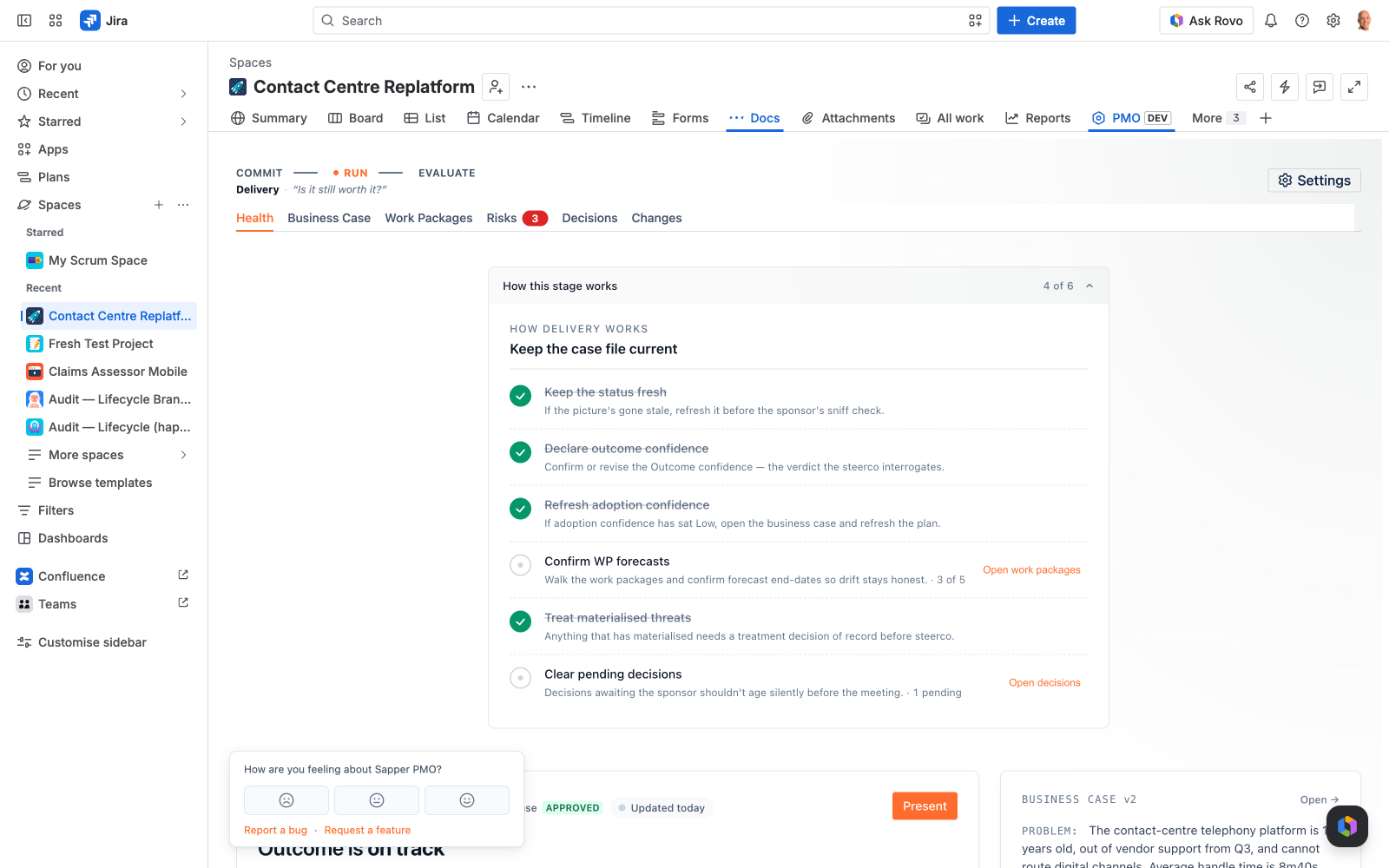
Six tabs on every Jira project. Investment Health is the one you land on.
Cost, schedule, scope, and risk each carry a RAG derived from the registers below them. That’s the default before anyone has weighed in. A person can override it, because bottom-up data needs judgement before it means anything. The override stays on the record: the derived value sits beside it, with a name against the change and the reason for it. That’s the opposite of a watermelon, green outside and red underneath. The gap between what the data derived and what a person decided sits in plain sight.
A derived status can be changed, but never quietly. The computed RAG stays on screen, with who overrode it and why: judgement, with an audit trail.
Investment Health
The dashboard you land on, and the one you present from. Includes a Steerco One-Pager presenter mode. Derived by the registers. Overridden on the record.
Investment Thesis
On track for what, exactly. Business problem, outcome, return expected, named sponsor and steering committee. Draft → Submitted → Approved.
Work Packages
Scope and budget at the unit executives think in. Baseline, forecast, actual, RAG, owner, linked Jira issues — with a phase and timeline view. Not tickets.
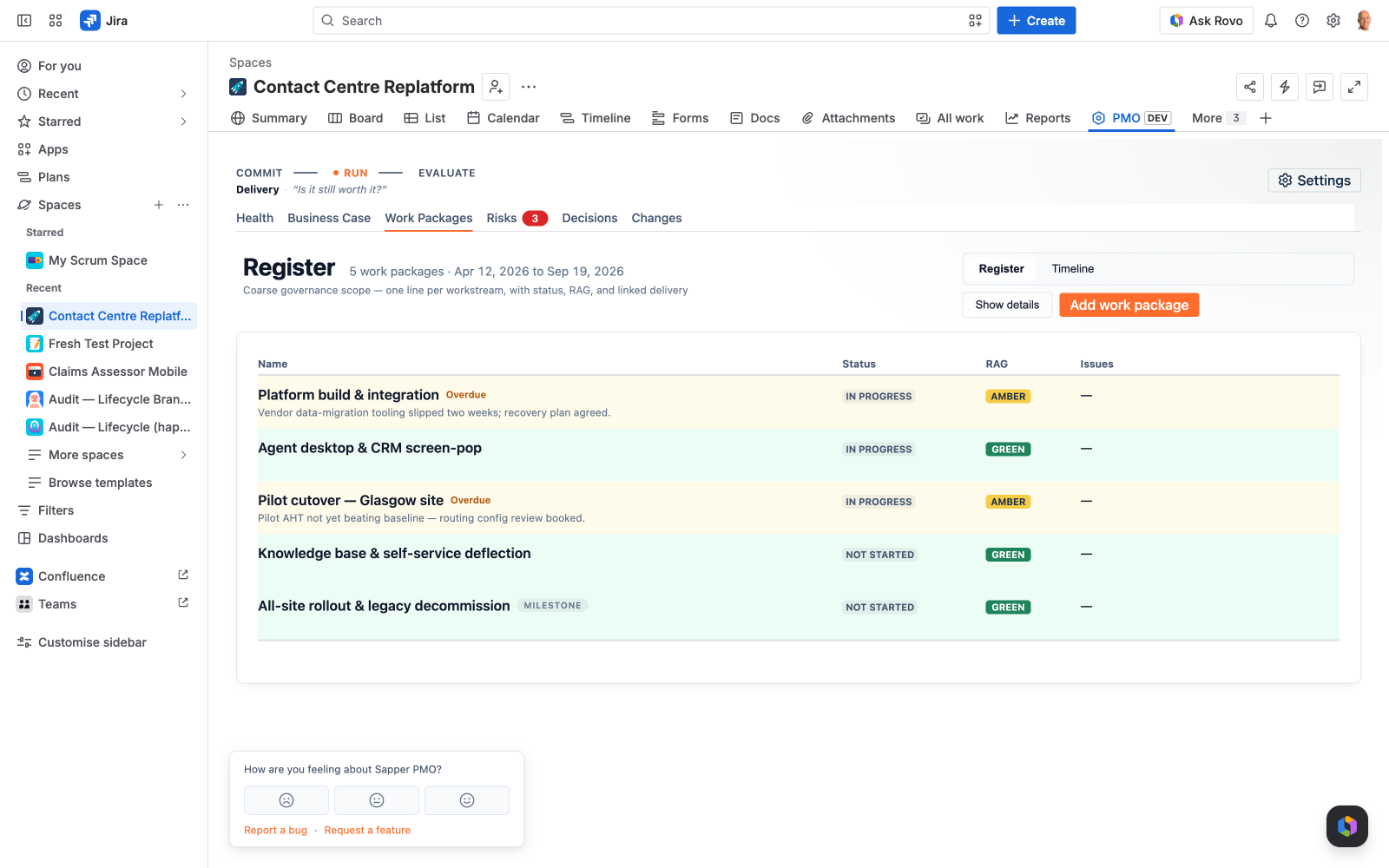
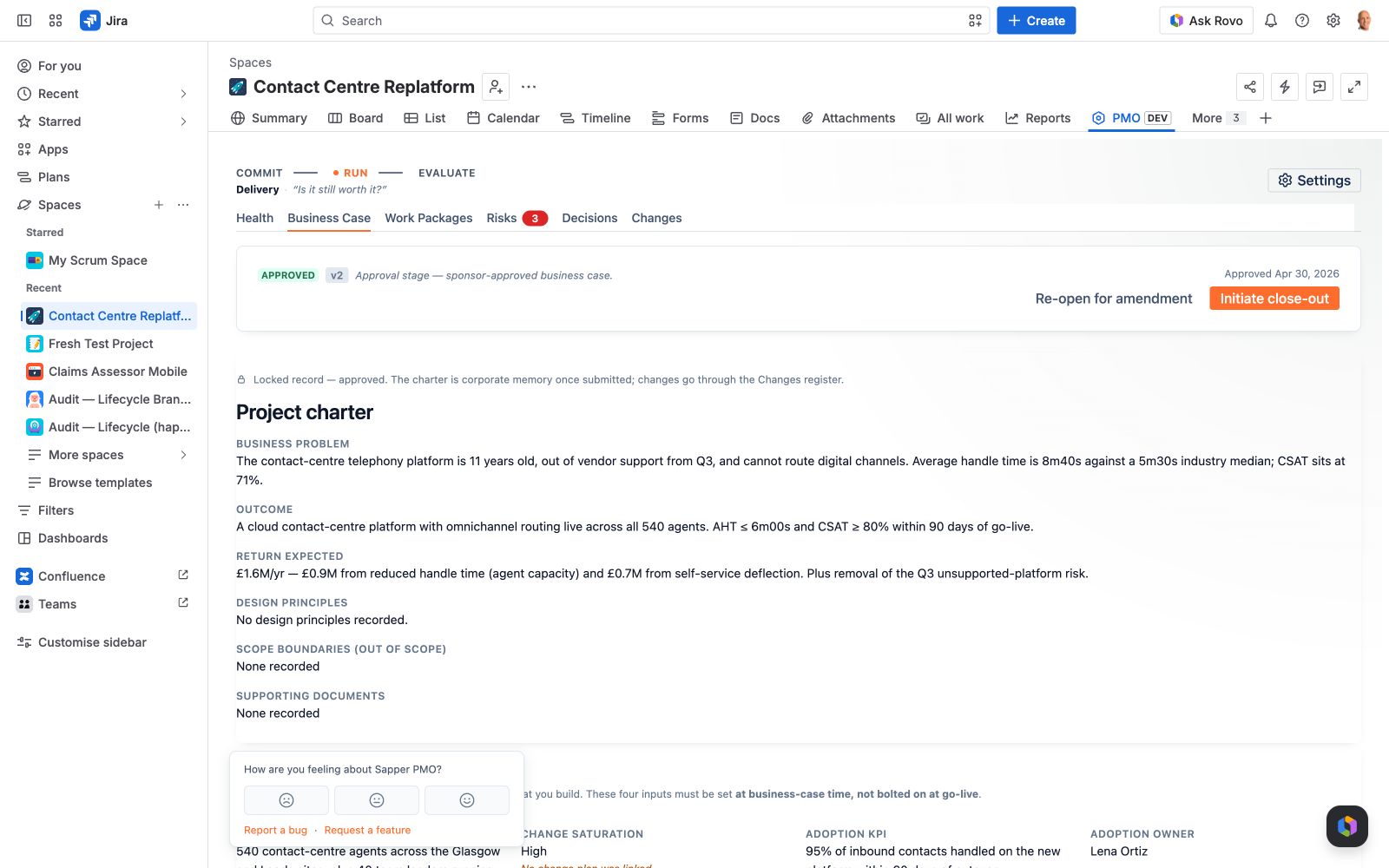
The registers the RAGs are derived from. Governance, not a Jira board.
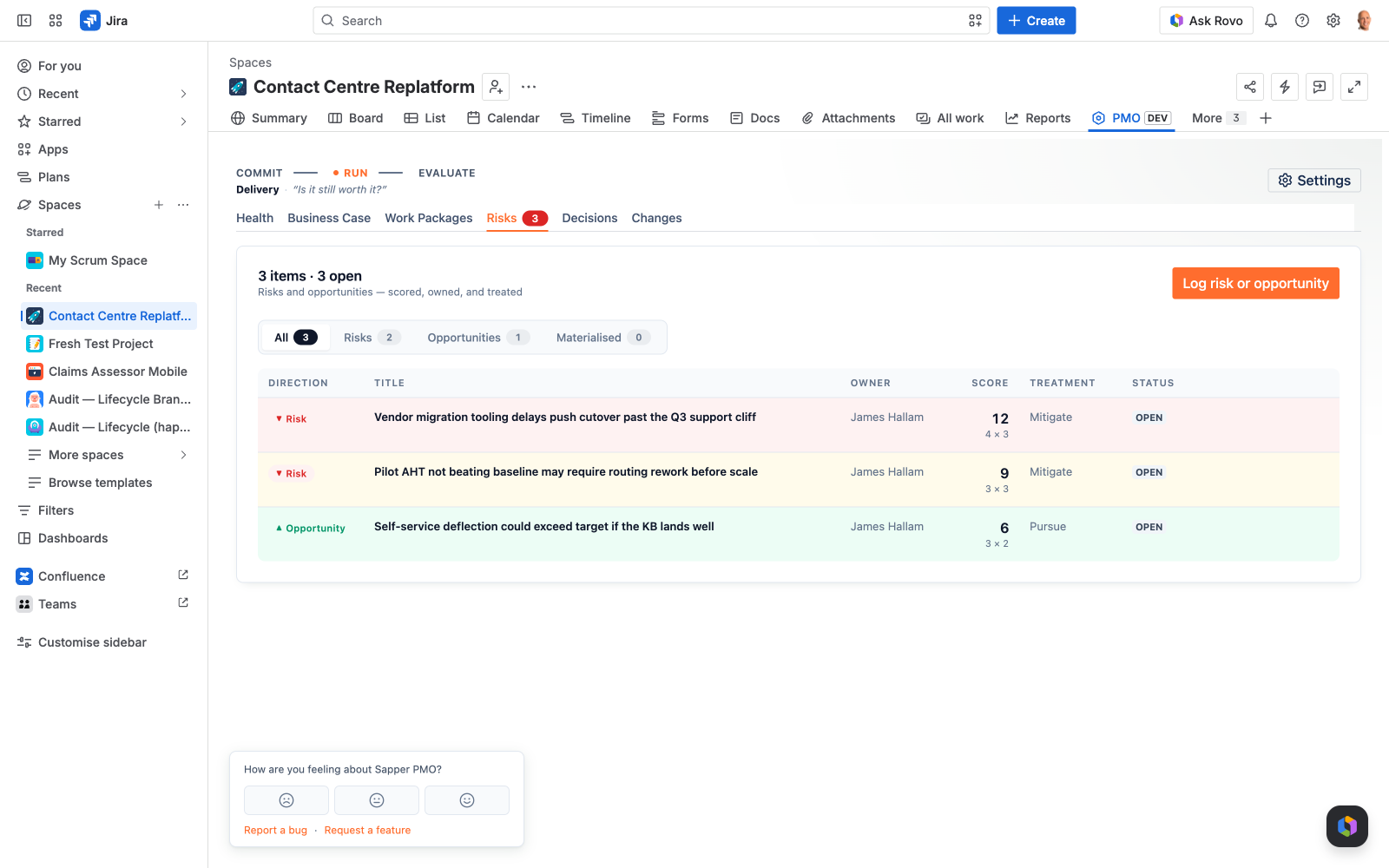
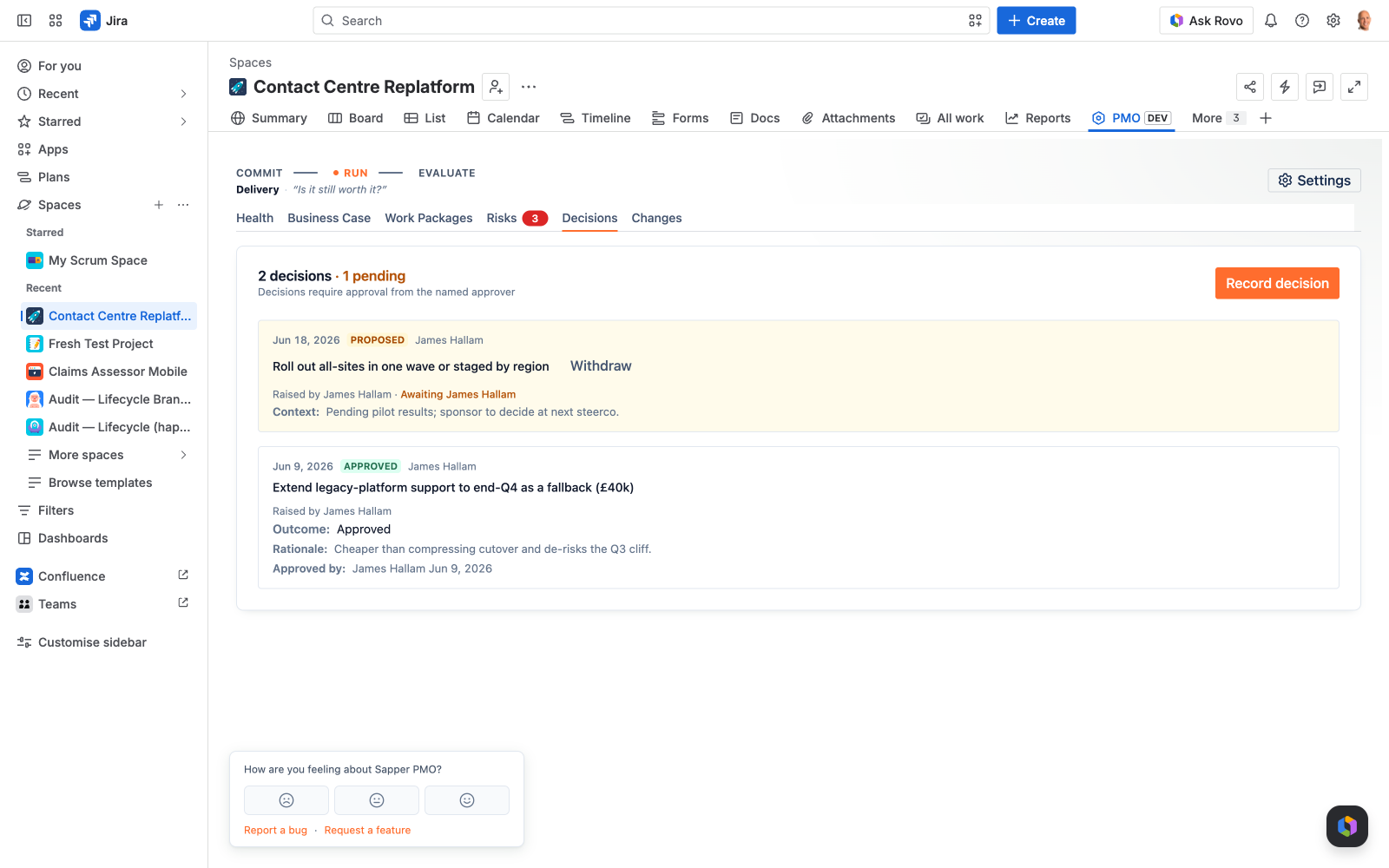
Risks, Decisions, and Changes. This is where the dashboard’s colour starts, and where the corporate memory lives.
Risks
A register on the threat, opportunity and materialised model, sorted by impact times likelihood, with the 4Ts treatment. The governance view, not a Jira board.
Decisions
Append-only corporate memory. Proposed → Approved or Rejected, separation of duties enforced. What did we approve, and when — answerable in the room.
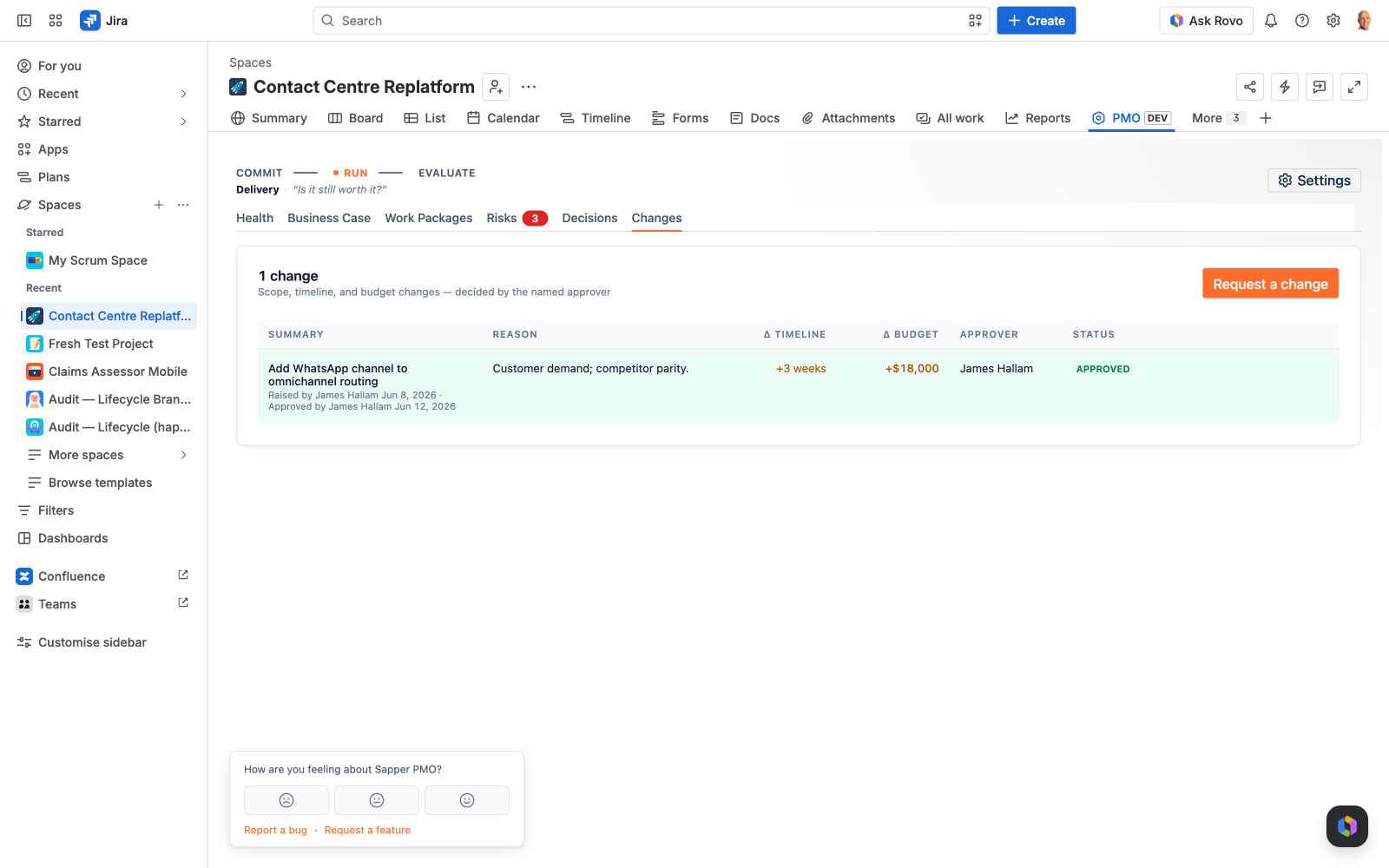
Changes
Scope, timeline and budget change requests on the same approval pattern. Once decided, the entry is immutable. The cumulative impact is always there to point at.
Roll it up, present it live, and answer the follow-up there and then.
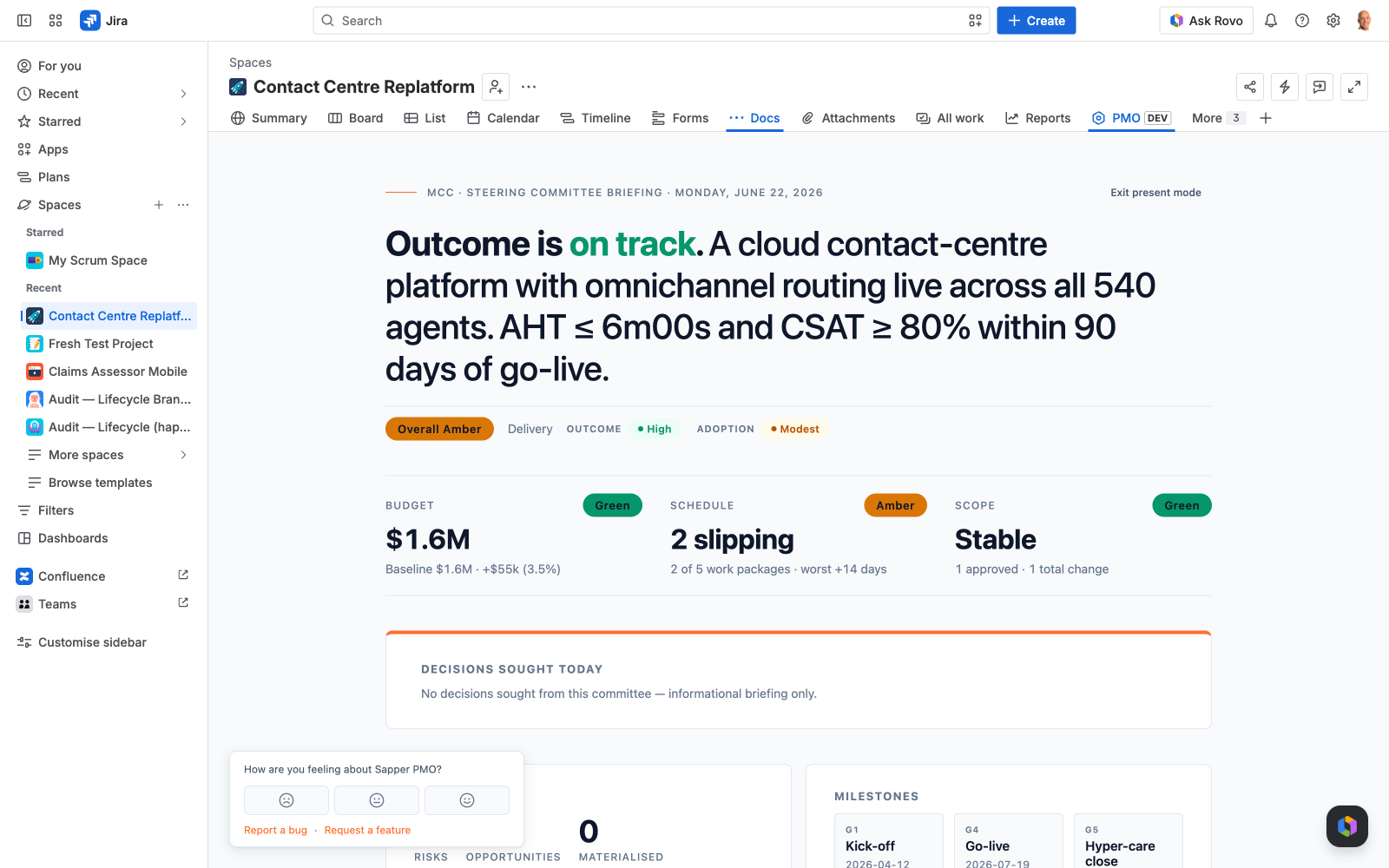
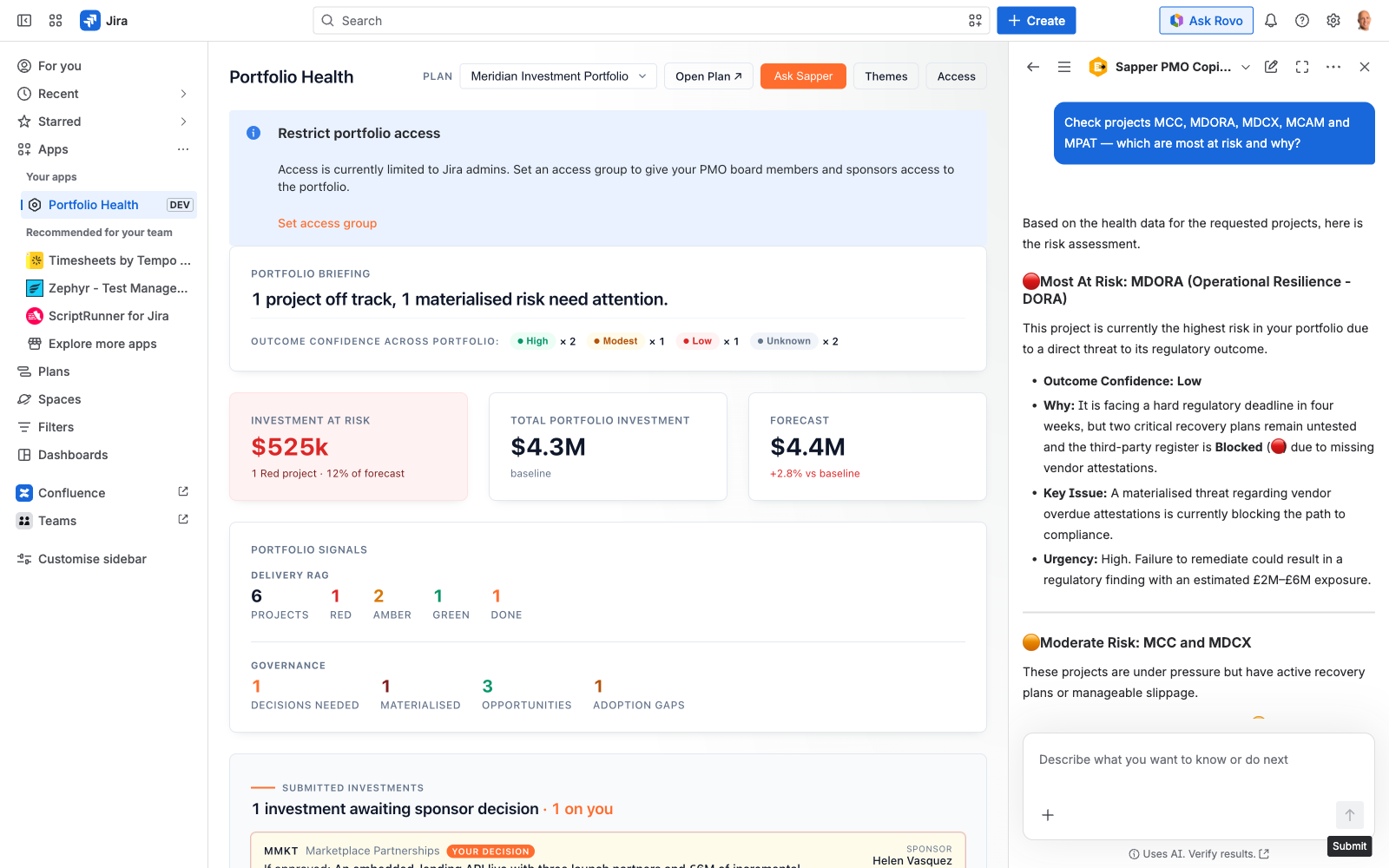
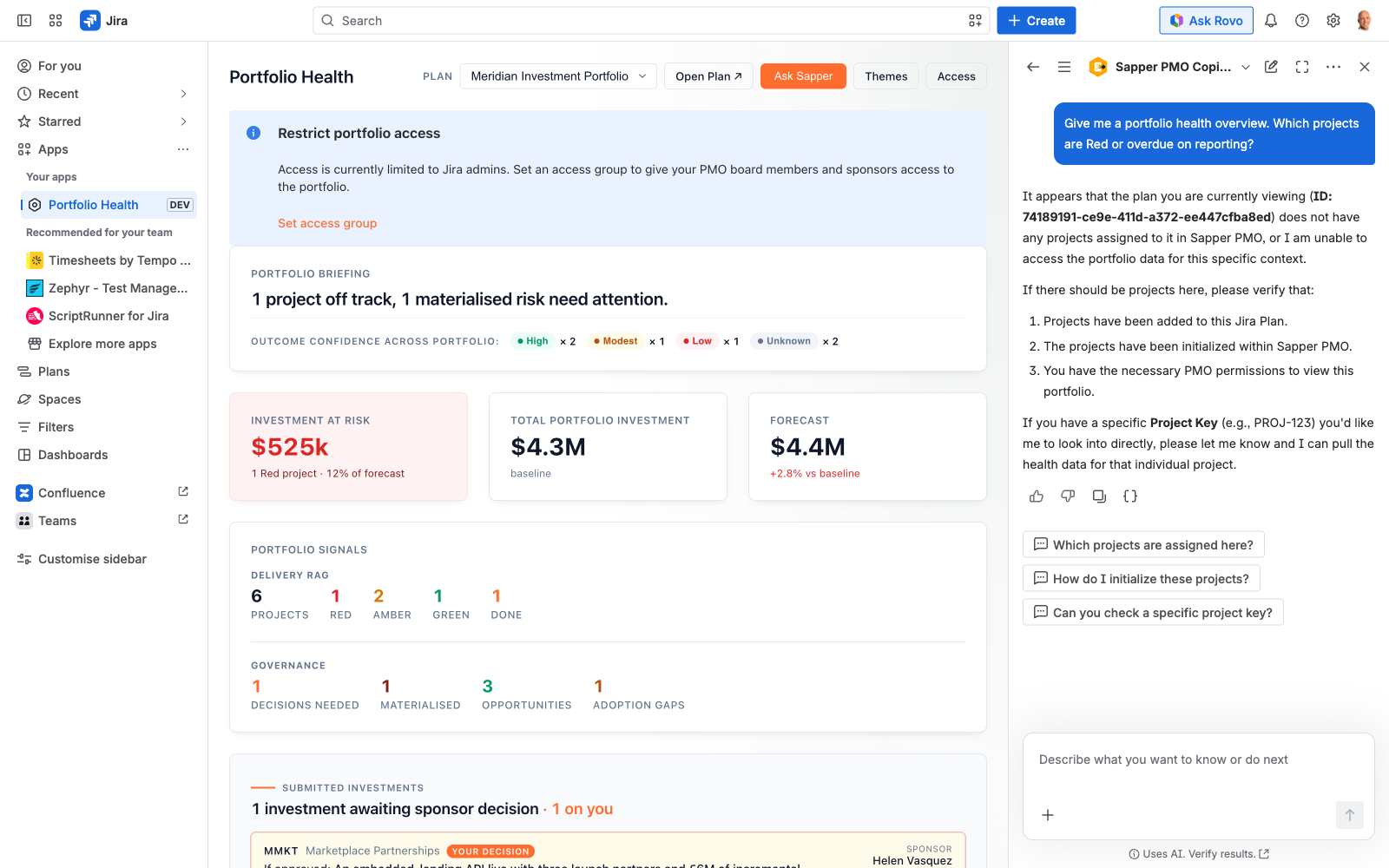
Portfolio Health rolls the projects into one view. Investment Health is the deck you present from. Ask Tollgate handles the question you never anticipated.
Portfolio Health
Every project's Investment Health in one view across the whole programme. Build a Jira Plan (formerly Advanced Roadmaps) and use it as the filter — rolled up overall and by investment theme.The board-level picture.
Present from the dashboard
Open Investment Health on the projector and run the meeting from it. There is no parallel slide pack to keep in sync. A branded board-deck export — one click, current data only — is on the roadmap for the exec audience who isn't in Jira. The dashboard is the deck.
Ask Tollgate
A Rovo copilot for the follow-up no deck anticipated. Ask it live, in the room — scoped to this project's Tollgate data, its Jira work items and linked Confluence docs, so you can read the financial model or the technical issue below the line, not just the RAG. Available on Premium and Enterprise Jira sites. Instead of coming back to it next month.

This is not another Gantt over Jira.
Advanced Roadmaps and the Gantt overlay-style apps still only manage delivery: sequencing, dependencies, who is doing what when. Tollgate manages the investment outcome — whether the money is still going to land. Delivery stays in Jira, exactly where it should be.
Below the line: Roadmaps, Gantt overlays, sprint metrics. They manage how the work gets done — the delivery team's question.
Above the line: Tollgate. It manages whether the investment lands — the sponsor's question.
Nothing leaves your instance. Safe to install on a messy, existing Jira.
Built on Atlassian Forge. It reads your Jira data and keeps its own governance records separately. It can't write to or change Jira data in your projects.
Built on Forge
It runs entirely on Atlassian Forge. No external servers, no external database, no data sent anywhere outside your Jira site. Inside your tenancy, full stop.
Read-only on your data
It reads Jira data and keeps its own governance records separately. It can't change anything in your existing projects.
Your projects, untouched
No new issue types, no workflow changes, no customisations to how delivery already works. Loosely coupled — you link a Tollgate item to a Jira issue only when there's a reason to, so delivery keeps its velocity.Safe on a messy, existing Jira instance.
Built for the people who run governance for real.
A few things worth knowing before you install, because the worst beta is the one you walked into expecting a finished product.
It works today
Tollgate is fully functional right now — every tab, every register, the portfolio roll-up and Ask Tollgate. It reads your Jira and keeps its own governance records separately, so it's safe to install alongside live delivery.Install today, not someday.
You'll install a Marketplace app
It asks only for read access and keeps its records separately, so it can't change your existing projects. A sandbox is safest; production is your call. A sandbox is recommended.
Free to start
Free for teams up to 10 Jira users, with a steeply declining per-user price above that. No card to start — the full gate workflow, decision record and CSV export are on the free tier.No card, no commitment.
Best on Jira Premium or Enterprise
A few features, like Ask Tollgate, don't run on a Standard licence.
/ Highlights
A look around the app


Get Tollgate on the Atlassian Marketplace — or talk to us about a pilot
The full product site lives at tollgatehq.com — the method articles, pricing and documentation included.

"I built Tollgate for the investment side of programmes, and I'm opening it to a small group who run governance for real. If that's you, I'd genuinely value your eyes on it."
— James Hallam, Softwired Digital
By registering you agree to our Privacy Policy and Terms of Service.